
作者:Shih-Ta Liu, Su-Chu Hsu
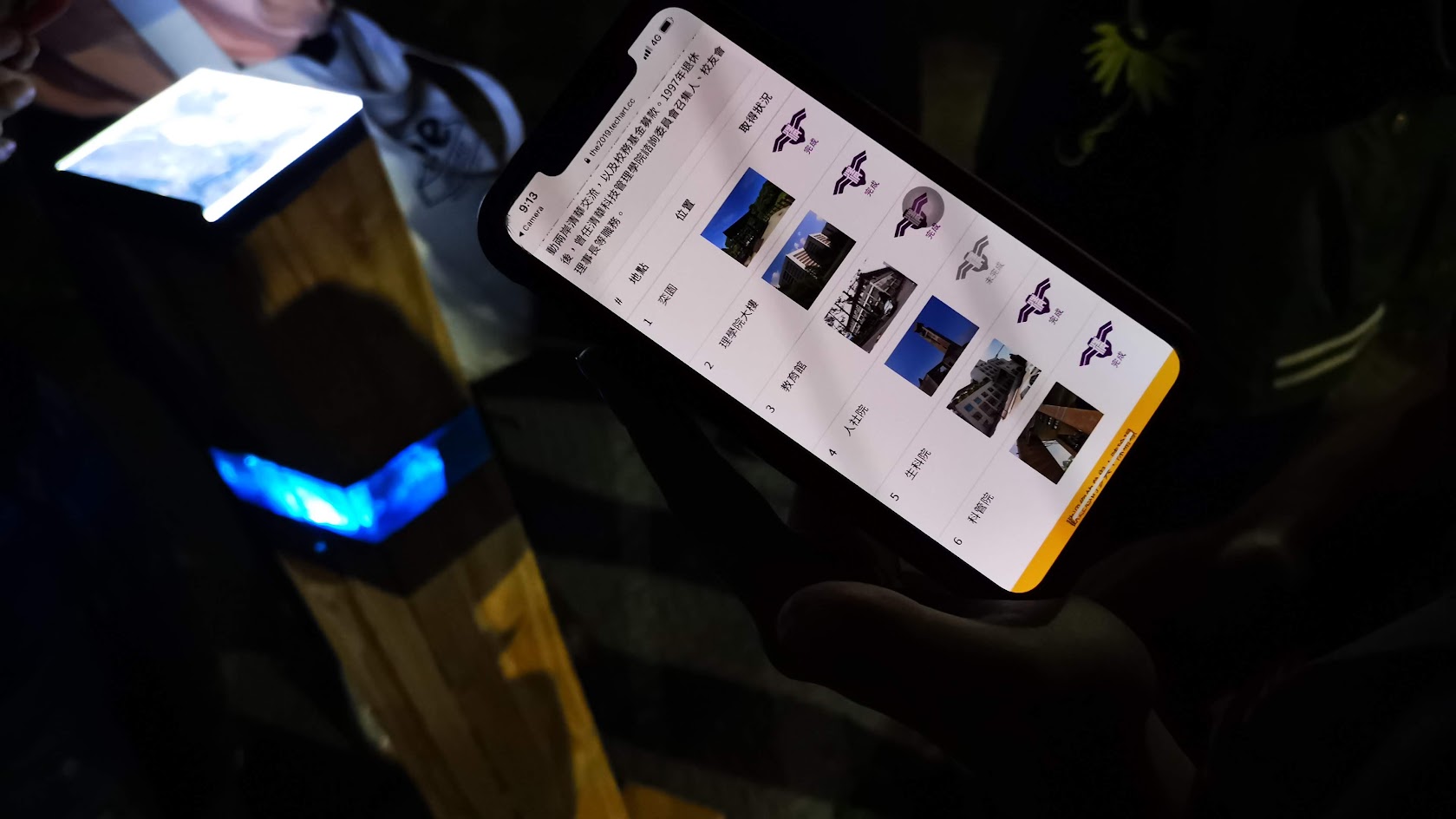
摘要:This research is a travel learning system combined with performance art practice. We integrate the Internet of Things and interactive installation to create spatially aware interaction capabilities in campus tour learning. The goal is to achieve three objectives: Intelligent, Objective, and Tour (I.O.T.). The content of this travel learning system mainly focuses on the artwork “Tsing Hua Countenance” from the “Tsing Hua Effects 2019 – Cross Media Technology and Art Festival.” The objective of the system is to commemorate and inspire. We design Knowledge Exploration Points (KEPs) to commemorate President Mei Yi-chi, who served as the common president of Tsing Hua University in Beijing and Taiwan. In addition, we have designed an Intelligent system that incorporates “IoT Cross-Media” interactive sensing. This system includes interactive installation (Light Pillars and Blossom Light Ball) and a smartphone WebAPP and IoT Cross-Media Integration. When students participate in campus travel and learning through performance art practices, using the interactive sensing mode of KEPs and IoT Cross-Media System, they use smartphones to perform “Retrieving” and “Pouring-in,” allowing the data to cross-media different installations between digital and analog. After students complete their travel and learning activities, the information is posted on Facebook, motivating more students to participate. We observed that each student’s learning and travel map trace differed, and we used these map traces to create “Data Representation” as Digital Art artwork. Additionally, we applied Self-Determination Theory (SDT) to explore the intrinsic and extrinsic motivational factors that the I.O.T. travel and learning system provides to students. We hope that experiences and applications of this system can be extended to other campus settings or knowledge-learning activities in museums in the future.
關鍵字:Internet of Things, Intelligent Objective Tour, Spatially Aware Interaction, Travel Learning, Self-Determination Theory
原始論文 DOI: 本會議論文未公開發布 DOI